Symptoms of a Bad Power Steering Pump
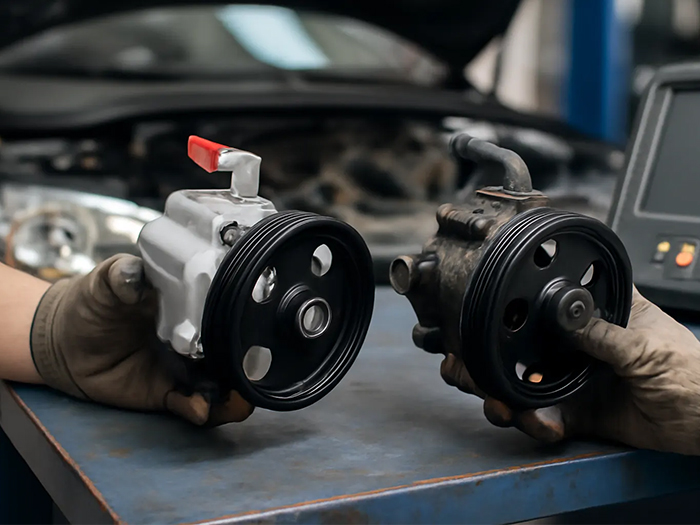
Hydraulic steering systems rely on a robust, highly efficient steering pump to pressurized steering fluid, delivering effortless maneuvering for light passenger vehicles, heavy-duty commercial trucks, and industrial fleets. When a steering pump degrades or suffers internal mechanical breakdown, hydraulic pressure drops precipitously, transforming standard driver input into an exhausting physical struggle and compromising total vehicular control.
For automotive spare parts wholesale distributors, regional auto part importers, and independent repair shop managers, understanding the precise technical indicators of power steering pump failure is fundamental. Early diagnostic detection prevents catastrophic secondary damage to downstream components—such as hydraulic steering racks, tie rods, and electronic control modules—while enabling shop owners to quote accurate repair estimates.
Furthermore, procurement teams must maintain reliable access to OEM-standard hydraulic components. Securing durable replacement units directly from established Chinese car parts manufacturers and premier power steering pump supplier partners ensures high inventory turn rates, minimal warranty claim rates, and maximum margin potential for automotive spare parts wholesale operations worldwide.
| KEY TAKEAWAYS FOR DISTRIBUTORS & REPAIR SHOPS • Diagnostic Vigilance: Early identification of whining noises, heavy steering response, and fluid discoloration prevents complete hydraulic failure and steering rack damage. • Wholesale Sourcing Integrity: Partnering with top-tier Chinese car parts manufacturers guarantees TS16949/IATF16949 compliance and OE-standard hydraulic performance. • B2B Inventory Management: Stocking high-demand OEM-spec steering pumps reduces shop turnaround time, driving repeat orders for automotive spare parts wholesale distributors. |
Fundamental Functions of Hydraulic Power Steering Pumps
Before examining failure indicators, technicians and parts managers must understand the hydraulic operating principle governing power steering pump assemblies:
- Rotary Vane Mechanism: Most modern hydraulic pumps utilize balanced rotary vane or gear configurations driven directly by the engine’s crankshaft via a serpentine drive belt.
- Hydraulic Pressurization: As the engine idles or accelerates, the pump draws hydraulic fluid from the fluid reservoir and pressurizes it between 800 PSI and 1,500 PSI (depending on vehicle application and steering angle demand).
- Fluid Delivery to Steering Rack: High-pressure fluid flows through reinforced high-pressure hoses to the steering rack rotary valve, amplifying the mechanical turning force applied by the driver.
- Return Loop & Heat Dissipation: Low-pressure fluid returns to the reservoir through a dedicated cooler line, dissipating thermal energy before entering the suction inlet again.
- When internal vanes wear out, rotor bearings fail, or internal shaft seals rupture, the pump loses its ability to sustain required operating pressure, triggering clear symptoms of a bad power steering pump.
Top Symptoms of a Bad Power Steering Pump
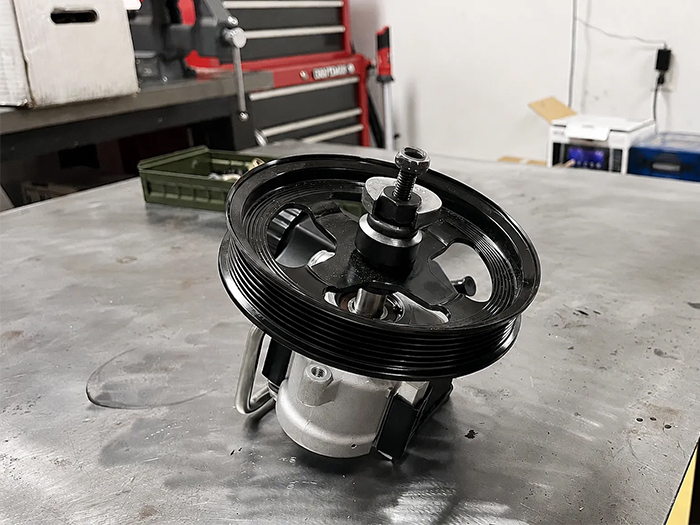
Vehicle owners and shop mechanics frequently observe specific behavioral and acoustic anomalies when a steering pump approaches the end of its operational lifespan. Recognizing these signs allows distributors and repair centers to stock and recommend exact replacement units promptly.
A. Distinctive Whining or Groaning Noises During Turns
An acoustic indicator is almost always the first sign of hydraulic steering pump distress. Drivers will notice a high-pitched whining, squeal, or deep groaning sound whenever the steering wheel is rotated, particularly during low-speed parking maneuvers or full-lock turns.
- Root Cause: Whining noises typically stem from severe fluid cavitation—air entering the hydraulic circuit due to low fluid levels, cracked suction hoses, or deteriorated shaft seals. Alternatively, worn internal rotor vanes frictionally grinding against the rotor housing create continuous groaning tones.
- Diagnostic Tip: If the noise intensifies as engine RPM increases, the pump’s drive bearing or internal impeller mechanism is failing and requires immediate pump replacement.
B. Heavy, Stiff, or Unresponsive Steering Wheel
When hydraulic pressure drops below factory thresholds, the steering system loses power assistance. The driver feels sudden, heavy resistance, making the vehicle exceptionally difficult to turn.
- Root Cause: Internal pressure relief valve sticking, bypass valve leakage, or severe vane erosion prevents the pump from generating necessary bar pressure.
- Diagnostic Tip: If steering effort increases dramatically while parallel parking or navigating sharp corners, check hydraulic pressure output with an inline pressure gauge before condemning the steering rack.
C. Squealing Sounds Upon Engine Startup
A sharp, high-decibel squeal immediately after turning the ignition key signals friction within the accessory drive system.
- Root Cause: This sound occurs when the steering pump pulley or internal drive shaft seizes temporarily, forcing the serpentine belt to drag over a stalled pulley. It can also indicate belt slippage due to leaking power steering fluid spraying onto the drive belt.
- Diagnostic Tip: Inspect the belt face for fluid contamination or glazed rubber surfaces. Ensure pulley alignment aligns with factory specification.
D. Hydraulic Fluid Discoloration & Burning Odor
Fresh power steering fluid is typically clear red, pink, or amber (depending on fluid type, such as ATF or dedicated CHF fluid). Degraded fluid is a direct symptom of pump breakdown.
- Dark / Black Fluid: Indicates oxidized fluid, suspended rubber particles from deteriorating internal hoses, or disintegrated shaft seal material.
- Metallic Glint / Glitter in Fluid: Contains fine bronze or steel micro-shavings generated by metal-on-metal friction between pump vanes, housing walls, or failed bearings.
- Pungent Burning Smell: Indicates severe thermal overload caused by continuous fluid bypass, restricted return lines, or operating with inadequate fluid volume.
E. Puddle of Hydraulic Fluid Beneath the Vehicle Engine Bay
Power steering fluid leaks around the pump housing, shaft seal, or reservoir hose connection points signal physical seal integrity failure.
- Root Cause: Hardened elastomer seals, blown shaft seals due to over-pressurization, or cracked aluminum housings result in active external fluid loss.
- Diagnostic Tip: A persistent drop in fluid reservoir levels without visible hose breaches points directly to a leaking pump front shaft seal.
F. Dashboard Warning Light Activation & ‘Service Power Steering’
Modern vehicles equipped with electro-hydraulic power steering (EHPS) or integrated vehicle stability control systems continuously monitor hydraulic pressure and pump electric motor current draw.
- Service Power Steering Light: Triggers when electronic sensors detect pressure drops or motor current spikes. Drivers will see a prominent ‘service power steering’ warning message on their instrument cluster.
- DTC Codes: Diagnostic Trouble Codes (such as C0550, C0561, or P0635) store in the steering control module, alerting technicians to electrical or mechanical power steering pump failure.
Diagnostic Summary Table for Technicians
| Symptom Observed | Primary Root Cause | Recommended Action / Replacement Solution |
| Whining / Groaning Noise | Fluid cavitation, worn rotor vanes, air in hydraulic system | Bleed air, check fluid level; replace steering pump if noise persists. |
| Heavy / Stiff Steering | Low hydraulic pressure output, stuck bypass valve | Perform pressure test; replace failing steering pump assembly. |
| Startup Squeal | Seized pump bearing, serpentine belt slippage, fluid on belt | Inspect pulley rotation, replace drive belt and pump if dragging. |
| Dark / Metallic Fluid | Internal pump wear, oxidized fluid, metal flakes present | Flush entire hydraulic system, install new pump and reservoir filter. |
| Active Fluid Leak / Service Light | Failed front shaft seal, pressure sensor trigger for service power steering | Replace damaged pump seals or install new power steering pump unit. |
Root Causes & Preventive Maintenance for B2B Fleet Operations
To minimize warranty claims and extend hydraulic system service life, auto parts distributors and fleet maintenance managers should advise technicians on key failure mechanisms and preventive practices:
Common Root Causes of Premature Failure
- Neglected Fluid Service: Hydraulic fluid absorbs moisture and accumulates thermal degradation products over time, reducing lubricity and accelerating vane wear.
- Contaminated Hydraulic Lines: Failing rubber hoses release micro-particles that clog small metering orifices inside the pump pressure relief valve.
- Incorrect Drive Belt Tension: Over-tightened serpentine belts exert excessive radial force on the pump pulley shaft, leading to early shaft bearing failure.
- Driving at Hard Lock: Holding the steering wheel firmly against full lock for extended periods spikes internal pressure beyond maximum threshold rating, placing extreme stress on hydraulic shaft seals.
Preventive Maintenance Protocols for Commercial Repair Shops
- Regular System Flushes: Flush power steering fluid every 30,000 to 50,000 miles (or according to vehicle manufacturer guidelines) using high-grade, OE-recommended synthetic fluid.
- Replace Reservoir Inline Filters: Many modern reservoirs feature integrated mesh filters. Replacing the reservoir during a pump repair prevents trapped contaminants from flowing back into the new unit.
- Inspect Belt Tensioners: Verify automatic tensioner alignment and belt condition during every routine service cycle.
Why Sourcing from Reliable Chinese Car Parts Manufacturers Matters for Wholesalers
In today’s competitive automotive aftermarket, automotive spare parts wholesale distributors, regional importers, and large-scale repair chains require supply partners capable of delivering high-volume precision engineering at competitive price points.
Partnering with professional Chinese car parts manufacturers and trusted power steering pump supplier networks yields distinct strategic and commercial advantages:
- Precision Engineering & IATF 16949 Certification: Leading Chinese production facilities adhere to international automotive quality management standards, utilizing CNC machining, automated dynamic balancing, and automated high-pressure testing rigs to match OE dimensional tolerances.
- 100% Performance End-of-Line Testing: Top-tier power steering pump supplier partners subject every production unit to 100% pressure, flow rate, and noise level testing before final packaging, ensuring zero-defect out-of-box reliability.
- Extensive Vehicle Application Coverage: From European luxury sedans and American pick-up trucks to Asian compact cars and commercial heavy duty vans, established Chinese car parts manufacturers maintain vast mold inventories covering thousands of SKUs.
- Cost Efficiency & High Profit Margins: By sourcing directly from primary manufacturers, automotive spare parts wholesale buyers eliminate intermediate trader markups, yielding substantial profit margins for distribution networks while offering end-users competitive pricing.
- Custom Packaging & OEM/ODM Flexibility: Flexible manufacturing facilities support private label brand packaging, custom barcoding, and tailored logistics solutions to streamline regional distribution.
Technical Procurement Checklist for B2B Automotive Spare Parts Buyers
When evaluating a new power steering pump supplier or adding steering pump SKUs to your wholesale catalog, utilize this technical verification checklist to ensure product reliability and minimize warranty return rates:
1. Housing Material Quality: Verify high-strength aluminum alloy die-casting that resists thermal distortion, internal cracking, and high-pressure fluid erosion.
2. Shaft & Vane Metallurgy: Confirm heat-treated carbon steel or alloy rotors and vanes designed to resist frictional wear under sustained 1,200+ PSI operating conditions.
3. Elastomer Seal Specifications: Ensure internal seals are manufactured from premium Viton or HNBR (Hydrogenated Nitrile Butadiene Rubber) capable of enduring extreme temperature fluctuations (-40°C to +150°C).
4. Pulley & Mounting Alignment: Ensure exact match to original equipment mounting points, belt groove geometry, and hose connection threads (metric vs. imperial).
5. Warranty Coverage & Claim Support: Look for suppliers offering comprehensive 12-to-24 month quality guarantees with streamlined technical claim evaluation procedures.
FAQ
Q1: How long does a typical power steering pump last under normal driving conditions?
A standard OEM or high-quality aftermarket steering pump typically lasts between 80,000 and 120,000 miles (130,000 to 190,000 km). However, lifespan depends heavily on regular fluid maintenance, driving conditions, and belt tension accuracy.
Q2: Can a driver safely operate a vehicle when experiencing ‘service power steering’ alerts?
Driving short distances with a compromised steering pump or an active service power steering alert is physically possible, but highly discouraged. Sudden loss of power assistance dramatically increases steering resistance, posing serious safety hazards during sudden maneuvers. Furthermore, running a pump starved of fluid causes rapid metal fragmentation, contaminating the entire hydraulic steering rack.
Q3: When replacing a bad power steering pump, should the fluid reservoir also be replaced?
Yes, replacing the fluid reservoir is strongly recommended. Most modern power steering reservoirs feature non-removable internal fine mesh filters that trap metallic debris and oxidized sludge. Installing a new pump while reusing a dirty reservoir can cause trapped particles to recirculate, destroying the replacement pump’s internal seals within weeks.
Q4: What is the main difference between hydraulic power steering pumps and electronic power steering (EPS)?
Hydraulic power steering pumps use engine power to pressurize fluid for mechanical amplification, whereas EPS systems use an electric motor controlled by an ECU directly on the steering column or rack. Some modern vehicles utilize Electro-Hydraulic Power Steering (EHPS), combining an electric motor with a traditional hydraulic steering pump.
Q5: How can automotive spare parts wholesale buyers ensure high product quality when importing steering pumps from China?
Wholesalers should partner with IATF 16949 certified Chinese car parts manufacturers that conduct 100% end-of-line functional testing (flow rate, noise level, and high-pressure leak testing). Requesting sample units for laboratory metallurgical analysis and bench testing prior to bulk order placement is also best practice.
Conclusion
Promptly identifying the symptoms of a bad power steering pump—from whining noises and heavy steering resistance to fluid discoloration and active fluid leaks—is critical for automotive repair technicians and fleet maintenance managers. Resolving hydraulic issues early preserves steering rack integrity and guarantees vehicle safety on the road.
For automotive spare parts wholesale distributors, stockists, and repair chains, offering top-quality replacement steering pumps is key to building customer loyalty and expanding market share. Partnering with experienced, quality-certified Chinese car parts manufacturers and premier power steering pump supplier partners ensures high-performance components, extensive vehicle application coverage, and optimal profitability.


Comments
Post a Comment