How to Choose a Reliable Control Arm Manufacturer for the Automotive Aftermarket
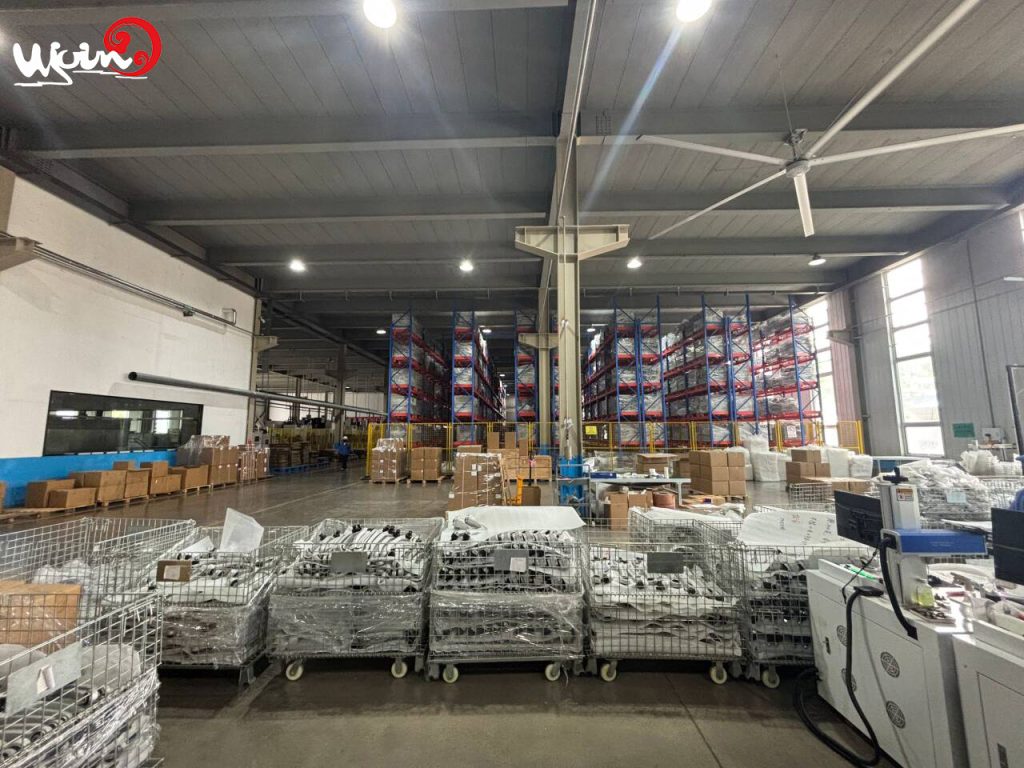
Selecting an exceptional suspension component vendor can dictate the difference between thriving business growth and costly operational bottlenecks. For automotive parts wholesalers, regional distributors, and large-scale repair chains, control arms represent one of the highest-turnover safety-critical replacement parts on the market. As vehicles age and road infrastructure challenges vehicle chassis systems worldwide, demand for robust, precision-engineered control arms continues to climb.
However, sourcing these vital steering and suspension components presents complex decisions. Navigating structural configurations, material selection, quality control certifications, and supply chain logistics requires a clear framework. Working with an experienced Car parts supplier ensures access to OE-matching quality, minimizing warranty claims and enhancing end-user trust. This comprehensive guide outlines everything you need to evaluate, select, and build a profitable long-term relationship with a premier control arm manufacturer for the global automotive aftermarket.
1. Control Arm Types and Structural Configurations: Bare Arms vs. Assemblies
Control arms serve as the fundamental pivot link connecting the vehicle’s frame to the steering knuckle or wheel hub assembly. Depending on the suspension design—whether MacPherson strut, double wishbone, or multi-link system—their structural architecture dictates both vehicle handling dynamic capabilities and maintenance complexity. When sourcing chassis parts, distributors must weigh the strategic advantages of stocking bare control arms versus complete control arm assemblies.
Bare Arms vs. Complete Assemblies: Strategic Stocking Decisions
Bare Control Arms: A bare control arm consists strictly of the stamped, cast, or forged metallic arm structure, lacking pre-installed rubber-to-metal bushings and ball joints. While bare arms carry lower unit procurement costs and occupy less volume in container shipping, they require installation technicians to press in bushings and ball joints manually using specialized workshop presses. This additional labor significantly increases repair times for auto repair shops.
Full Control Arm Assemblies: Conversely, a complete control arm assembly comes pre-fitted with OE-spec rubber bushings, hydraulic bushings, and integrated or bolt-on ball joints. Sourcing complete assemblies from an established control arm manufacturer offers distinct advantages across the supply chain:
- Reduced Workshop Labor: Repair technicians can replace the entire suspension arm in a single bolt-on operation, saving up to 60% of repair labor time.
- Enhanced Installation Reliability: Pre-pressed bushings and precision-installed ball joints eliminates the risk of improper installation or bushing tearing during workshop press operations.
- Higher Ticket Value: Distributors and wholesalers achieve higher revenue and profit margins per unit sold compared to selling individual wear components separately.
- Comprehensive System Renewal: Replacing the arm, bushings, and ball joint simultaneously restores full suspension alignment and dampening performance, reducing customer returns.
Structural Configurations Across Vehicle Classes
Catalog Versatility: A top-tier control arm supplier maintains extensive catalog coverage spanning diverse structural designs:
- Upper & Lower Control Arms: Engineered to withstand specific load dynamics; lower control arms typically bear vehicle weight and impact loads, requiring heavier-duty construction.
- Track Control Arms & Wishbones: A-arm designs provide dual-pivot stability, crucial for front-wheel alignment stability under heavy braking and cornering.
- Trailing & Control Links: Multi-link rear suspension designs utilize specialized lateral and trailing arms to deliver precise wheel tracking and comfortable ride quality in modern passenger cars and SUVs.
2. Choosing the Right Materials: Steel vs. Aluminum Control Arms for Modern Vehicles
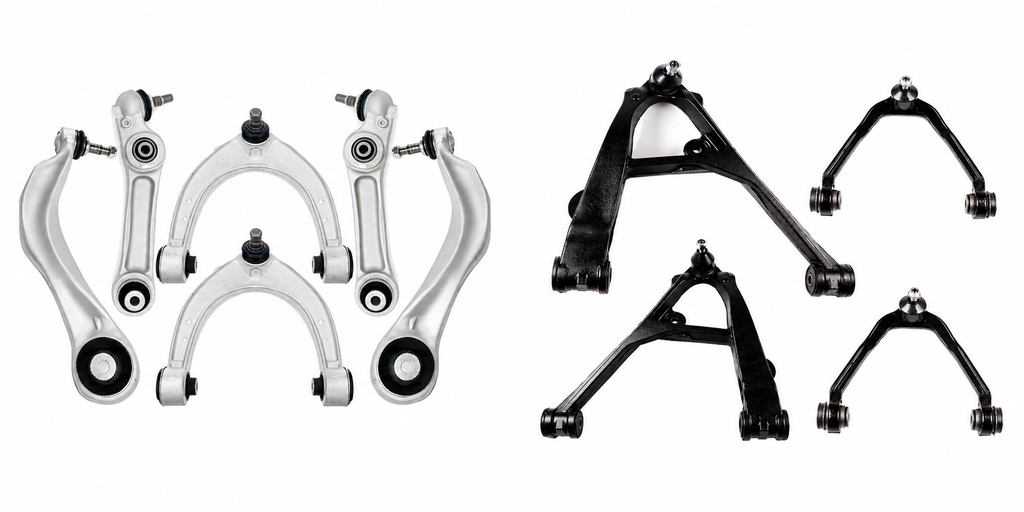
Material selection directly impacts a control arm’s structural tensile strength, unsprung mass, corrosion resistance, and overall manufacturing cost. Automotive original equipment manufacturers (OEMs) select materials based on vehicle weight, suspension geometry, and performance targets. A professional control arm manufacturing enterprise must master multiple metallurgical technologies to serve the full automotive spectrum.
| Material Type | Key Characteristics | Primary Vehicle Applications | Distributor Advantage |
| Stamped Steel | High tensile strength, economical production, rigid heavy-gauge construction. | Economy passenger cars, compact vehicles, budget-conscious replacement lines. | Lowest unit cost, maximum market volume, exceptional impact toughness. |
| Cast Iron / Nodular Iron | Superior compressive strength, high vibration damping, robust fatigue resistance. | Commercial vans, pickup trucks, light commercial vehicles (LCVs), SUVs. | Ideal for heavy-duty load application, high durability in rugged road conditions. |
| Forged Aluminum Alloy (6061-T6 / 6082-T6) | Ultra-lightweight unsprung mass, premium corrosion resistance, high strength-to-weight ratio. | Luxury sedans, electric vehicles (EVs), sports cars, modern premium crossover platforms. | High profit margins, growing OEM demand, essential for lightweighting trends. |
Metallurgical Precision & Modern Manufacturing Techniques
When working with premium chinese auto parts manufacturers, evaluating metallurgical control is crucial. High-grade steel control arms utilize automated robotic welding and precise e-coating (electrophoretic deposition) to prevent rust and surface corrosion under extreme weather conditions. For aluminum control arms, forged production processes align the internal grain structure of high-strength alloys, preventing micro-fractures under dynamic cornering loads that inferior cast aluminum arms often suffer.
3. Solving Common B2B Sourcing Pain Points in Control Arm Manufacturing
B2B automotive parts buyers—whether importing full containers or distributing locally—face persistent hurdles when managing chassis component supply chains. Partnering with the best control arm manufacturer requires finding a supplier who actively resolves these operational bottlenecks through modern systems and rigorous engineering.
1. Inaccurate Fitment & Fit-ment Deviations
The Issue: Nothing damages a wholesaler’s reputation faster than supply batches with dimensional inaccuracies that result in poor wheel alignment, improper ball joint positioning, or mounting bolt misalignment during installation.
The Solution: Reliable manufacturers utilize 3D laser scanning of original equipment samples and reverse engineering software to build precise CAD models. State-of-the-art CNC machining centers process mounting points and ball joint housings within tight tolerances (within ±0.02mm), ensuring direct drop-in replacement guarantee.
2. Premature Bushing Degradation & Noise (NVH Issues)
The Issue: Low-quality rubber bushings dry-rot, tear, or squeak after just a few thousand miles, causing customer returns and field failures due to excessive Noise, Vibration, and Harshness (NVH).
The Solution: Leading manufacturers utilize premium natural rubber compound formulations compounded with specialized anti-aging additives. Furthermore, advanced hydraulic bushing technologies absorb high-frequency road vibrations, matching original factory comfort levels.
3. Ball Joint Failure & Dust Boot Cracking
The Issue: Ball joint play or stud shearing leads to catastrophic suspension failure, while low-grade CR (chloroprene) rubber dust boots crack under ozone exposure, letting contaminants degrade the internal ball stud.
The Solution: High-specification manufacturing incorporates heat-treated 40Cr or 4140 chromoly steel ball studs, mirror-polished ball surfaces, synthetic grease lubrication, and weather-resistant Neoprene/TPU dust covers rated for extreme temperature operating ranges (-40°C to +120°C).
4. Supply Chain Delays & Catalog Obsolescence
The Issue: Slow new product development (NPD) leaves distributors unable to supply replacement arms for newly released vehicle platforms, while long manufacturing lead times tie up operational capital.
The Solution: Top-tier suppliers maintain dynamic R&D cycles, introducing hundreds of new stock keeping units (SKUs) annually for late-model European, American, Asian, and electric vehicle models, while providing streamlined inventory management and rapid shipping schedules.
4. Rigorous Quality Testing Standards: Ensuring Durability and Safety in Suspension Parts
Safety components demand absolute manufacturing consistency. A reliable control arm manufacturer must maintain strict quality control protocols across raw material inspection, in-line machining validation, and final product testing. Buyers should verify that suppliers hold international automotive quality certifications, specifically ISO 9001 and IATF 16949.
Essential Quality Control Tests for Control Arms
- Mud Shock & Radial Dynamic Fatigue Testing: Simulates millions of continuous suspension cycling movements under severe load conditions to verify arm structure fatigue limits and bushing elasticity.
- Tensile & Push/Pull-Out Force Testing: Measures the maximum force required to dislodge ball joint studs or press-fitted rubber bushings from the control arm housing, ensuring safety structural margins.
- Salt Spray Anti-Corrosion Testing (ASTM B117): Exposes surface treatments (e-coating, powder coating, anodizing) to continuous salt mist for 480 to 960+ hours, guaranteeing rust prevention in harsh winter or coastal climates.
- Rubber Mud & Extreme Temperature Testing: Subjects rubber components to environmental chamber cycles ranging from cryogenic cold (-40°C) to intense heat (+120°C) to ensure boot and bushing longevity.
- 3D Coordinate Measuring Machine (CMM) Verification: Validates critical geometric dimensions and bolt-hole spacing against OE benchmark drawings for 100% fitment accuracy.
5. Partnering with Ujoin Auto Parts: Private Labeling, One-Stop Sourcing, and Flexible MOQ
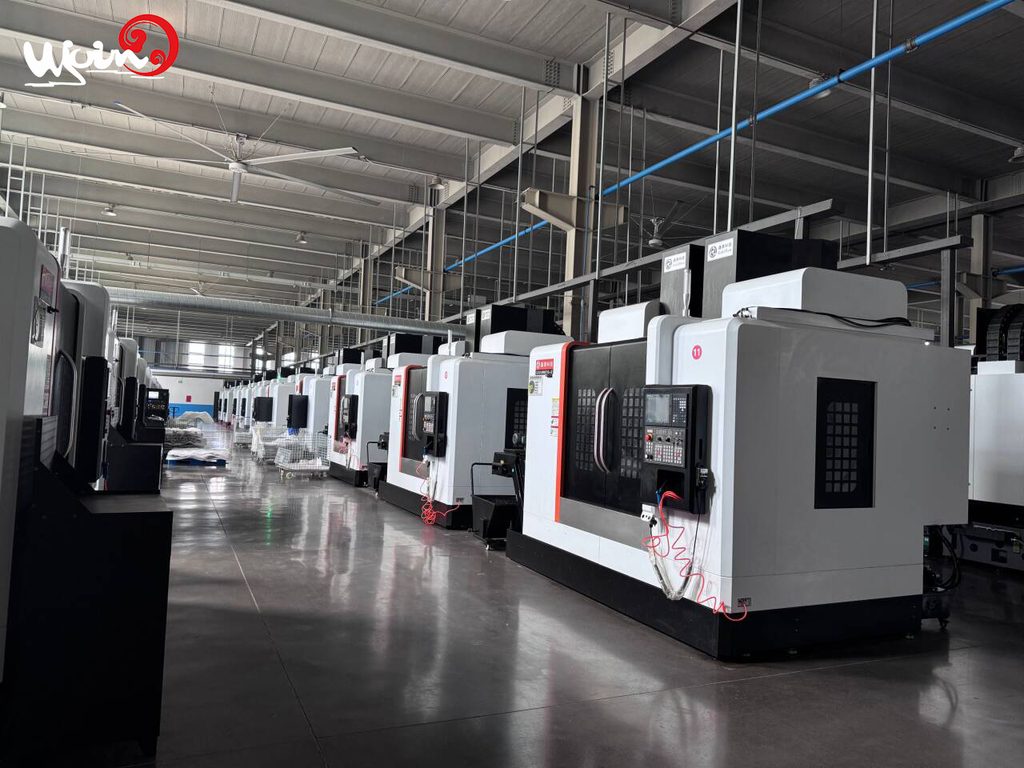
Choosing the right supply partner involves looking beyond basic technical capabilities; it requires securing a partner dedicated to driving your business growth. At Ujoin Auto Parts (ujautoparts.com), we have established ourselves as a premier Car parts supplier and trusted automotive suspension specialist, empowering global B2B clients with comprehensive chassis solutions.
Comprehensive Private Labeling & Branding Support
Building market equity requires distinct branding. Ujoin provides full OEM/ODM private label customized services, including customized product laser engraving, custom color box packaging, branded dust caps, barcode labeling, and protective inner wrapping. We help wholesalers establish a dominant presence in their local aftermarket sectors.
One-Stop Suspension & Steering Sourcing
Managing multiple vendors for different chassis components creates administrative inefficiency and increases shipping costs. Ujoin Auto Parts delivers an integrated one-stop chassis procurement portfolio across multiple auto parts categories:
- Suspension Systems: Control arms, trailing arms, sway bar links (stabilizer links), ball joints, shock absorbers, strut mounts.
- Steering Systems: Hydraulic & electronic power steering racks, tie rod ends, rack ends, pitman arms, idler arms.
- Drivetrain & Brake Components: Drive shafts, CV joints, brake pads, fuel pumps, ignition coils.
Flexible MOQ & Tailored B2B Supply Chain Solutions
Recognizing that inventory flexibility is crucial for business agility, Ujoin offers low minimum order quantities (MOQs) for mixed container orders. Whether you are expanding a regional distribution hub or building inventory for a specialized workshop network, our agile manufacturing schedules, strict quality controls, and competitive factory-direct pricing ensure your business maintains strong margins and healthy inventory turnover.
6. FAQ
Q1: What is the typical lifespan of an aftermarket control arm assembly?
Under standard driving conditions, high-quality aftermarket control arms last between 50,000 to 100,000 miles (80,000 to 160,000 km). Lifespan depends on road conditions, driving habits, vehicle load, and rubber bushing quality.
Q2: Should control arms always be replaced in pairs?
Yes, automotive experts strongly recommend replacing control arms in pairs (left and right). Because both sides experience similar wear and tear, replacing only one side can lead to uneven suspension damping, altered steering geometry, and premature wear on adjacent tire treads.
Q3: How do chinese auto parts manufacturers guarantee OE fitment accuracy?
Leading manufacturers utilize 3D CMM coordinate measuring machines, reverse-engineer genuine OEM parts, and employ precision CNC machining. Rigorous jig testing verifies all mounting hole locations and ball joint taper angles before mass production.
Q4: What is the benefit of hydraulic bushings in modern control arms?
Hydraulic bushings contain internal fluid chambers designed to absorb and dampen high-frequency road vibrations far more effectively than solid rubber bushings. They provide superior ride comfort and reduced cabin noise, especially in luxury cars and modern SUVs.
Q5: Can Ujoin Auto Parts customize packaging and logo laser etching for small initial orders?
Yes! Ujoin Auto Parts supports growing distributors with flexible branding solutions. We offer laser marking directly on the control arm body and custom box packaging with low MOQs to help you build your private label brand effortlessly.
7. Conclusion
Sourcing reliable suspension parts is a cornerstone strategy for building a scalable, profitable automotive aftermarket business. By understanding structural configurations, selecting appropriate steel or aluminum materials, addressing critical B2B sourcing challenges, and insisting on IATF 16949-certified testing standards, distributors and repair chains can secure components that ensure customer safety and brand loyalty.
As a leading control arm manufacturer and total chassis solution provider, Ujoin Auto Parts combines advanced metallurgical engineering, strict quality verification, flexible private label options, and responsive B2B customer support. Contact our technical sales team today to request a comprehensive product catalog, sample units, or a customized supply quote tailored to your regional market needs.
8. Related Guides
What Makes a Reliable Control Arm?
Top 10 World Control Arms Manufacturers
A Comprehensive B2B Guide: What Are The Symptoms Of a Bad Control Arm?
Control Arm Replacement Cost: The Ultimate B2B Guide for Wholesalers
Control Arms 101: Frequently Asked Questions You Need to Know


Comments
Post a Comment