Bad Tie Rod End Symptoms
Within the automotive aftermarket supply chain, steering and suspension systems represent a high-turnover category where mechanical integrity is paramount. Among these components, the tie rod end is a zero-tolerance safety item; structural failure directly results in a loss of vehicle control, exposing repair facilities and commercial fleets to severe legal and financial risks.
For wholesale suppliers, deep technical insight into tie rod end degradation is essential for robust quality control and value-added client support.
This guide analyzes the engineering-level symptoms of tie rod wear. By understanding these failure modes, your purchasing and QA teams can better assess component longevity, benchmark factory standards, and mitigate supply chain risk through superior inventory selection.
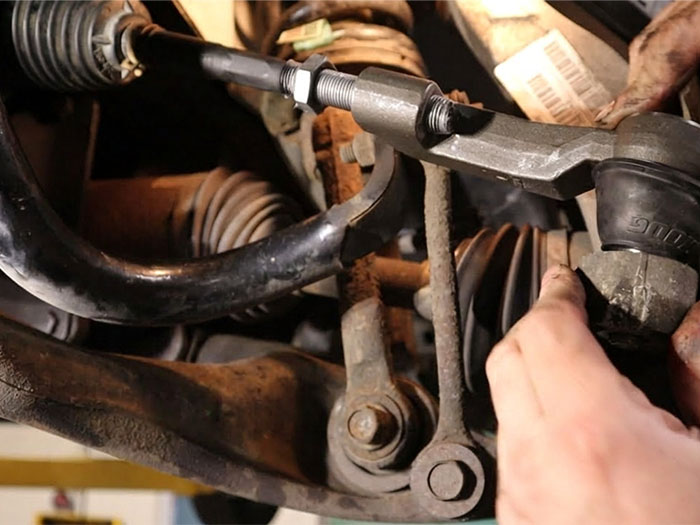
Real-World Diagnostic Indicators of a Failing Tie Rod End
When steering components begin to degrade, they manifest specific physical and kinetic symptoms. For bulk buyers managing quality control or handling warranty claims, recognizing these field indicators is essential for identifying whether a batch defect or standard operational wear is at play.
Erratic Tire Wear
One of the most immediate measurable signs of a failing tie rod end is accelerated and uneven tire wear. When the internal ball joint of a tie rod end develops excessive play, it destabilizes the wheel’s alignment angles, specifically affecting the toe-in or toe-out settings.
Instead of rolling smoothly along the tarmac, the tires are effectively dragged sideways over thousands of miles. This causes “feathering”—a distinct wear pattern where the tread blocks feel smooth when rubbed in one direction but sharp when rubbed in the opposite direction. For commercial fleet operators, this drastically increases operational costs by shortening tire life by up to 40%.
Steering Wheel Play and Kinetic Feedback
A pristine steering system relies on zero-tolerance mechanical linkages to translate steering wheel rotation into immediate wheel articulation. As the internal bearings within the tie rod housing wear down, a mechanical gap (backlash) forms.
Downstream clients will report a “loose” or “dead” zone in the center of the steering wheel. At highway speeds, this mechanical play often translates into a distinct vibration or oscillation felt directly through the steering column. This is not merely a comfort issue; it reduces driver response times in emergency maneuvers.
Auditory Clues: Clunking and Popping Noise
When the internal lubrication fails or the protective rubber boot tears, metal-on-metal contact occurs. Technicians will typically report hearing a distinct clunking, rattling, or popping noise coming from the front axle when making tight turns at low speeds or when navigating uneven road surfaces. This sound indicates that the ball stud is knocking against the outer socket wall—a clear warning that mechanical separation could be imminent.
The Mechanical Engineering and Metallurgy Behind Tie Rod Failure
To source reliably from a china auto spare parts suppliers hub, procurement managers must understand why these components fail from a material standpoint. A tie rod end is subjected to massive cyclic loading, environmental contamination, and high impact forces throughout its operational lifespan.
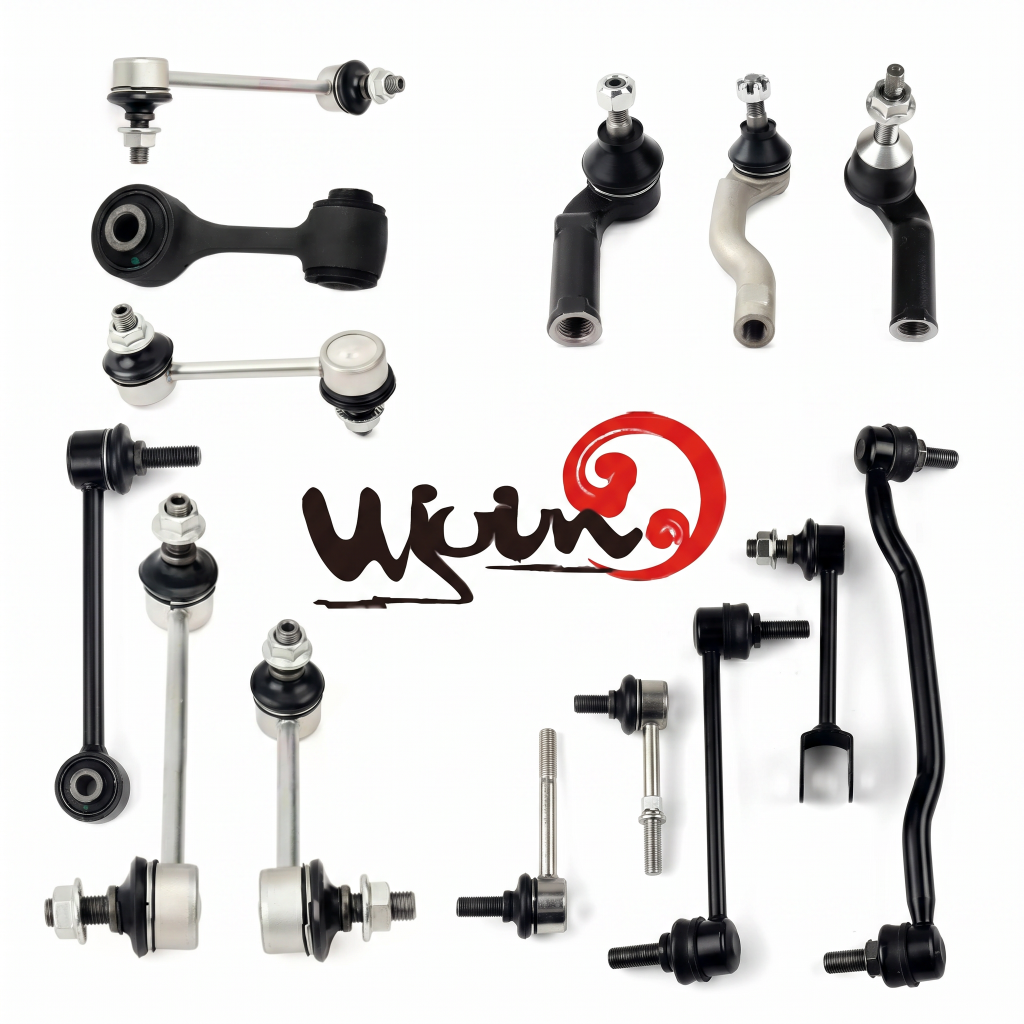
Material Integrity: Forged vs. Cast Housings
The structural integrity of a tie rod end relies fundamentally on its manufacturing process. Premium components produced by an experienced tie rod end manufacturer utilize hot-forged medium-carbon steel (typically equivalent to SAE 1045 or 40Cr). Forging aligns the internal grain structure of the metal with the contours of the part, vastly increasing its tensile strength and fatigue resistance.
In contrast, substandard components often utilize cast iron or inferior alloy configurations. Casting introduces structural porosity and micro-cracks, which act as stress concentrators under heavy load conditions, leading to sudden, brittle fractures rather than gradual wear.
| Material Property | Premium Forged Steel (e.g., SAE 1045) | Substandard Cast Iron/Alloy |
| Grain Structure | Aligned and continuous; high fatigue life | Discontinuous; prone to internal voids |
| Impact Resistance | High ductility; absorbs road shocks | Brittle; prone to sudden fracturing |
| Surface Hardness | Induction hardened ball stud (HRC 55-60) | Inconsistent case depth; rapid wear |
The Role of the Internal Polymer Bearing Seat
Inside the outer housing, the spherical ball stud rotates within a specialized bearing seat. Advanced manufacturers utilize high-molecular-weight polymers (such as POM/Polyoxymethylene) infused with low-friction additives. This seat must withstand continuous friction while maintaining structural dimensions. If a manufacturer cuts costs by using low-grade plastics, the seat deforms under high loads, creating instant axial and radial play.
Environmental Sealing: Chloroprene Rubber Boots
The leading root cause of premature tie rod end failure is not mechanical wear, but environmental contamination. The protective dust boot is the component’s primary line of defense.
High-tier manufacturers utilize premium Chloroprene (CR) or Neoprene rubber formulations that resist ozone degradation, extreme temperatures (-40°C to +120°C), and road chemical exposure. If a boot cracks, water and abrasive grit enter the joint, grinding down the polished ball stud and causing rapid failure.
Industrial Quality Controls and Testing Protocols
In the auto parts wholesale sector, brand reputation hinges entirely on product consistency. A single defective batch can ruin years of client trust. Therefore, verifying that your supplier utilizes rigorous, standardized testing protocols is non-negotiable.
IATF 16949: The Global Automotive Standard
When auditing a factory for a wholesale tie rod end contract, the first benchmark of authority is compliance with the IATF 16949 quality management system. Unlike general ISO 9001 certifications, IATF 16949 is tailored strictly to the automotive supply chain, requiring continuous improvement, defect prevention, and the reduction of variation and waste in the supply chain.
Mandatory Laboratory Performance Testing
A reliable manufacturing partner does not rely on visual inspection alone. Every production batch should undergo a suite of destructive and non-destructive laboratory tests to validate structural integrity:
Muddy Water / Environmental Simulation Testing: The fully assembled tie rod end is submerged in an abrasive mud bath and cycled hundreds of thousands of times to verify the sealing capability of the rubber dust boot under extreme real-world conditions.
Salt Spray Testing (ASTM B117): To ensure maximum corrosion resistance against road salt and moisture, components undergo salt spray testing for upwards of 400 to 720 hours. Premium surface treatments, such as electrodeposition coating (E-coating) or zinc-nickel plating, prevent surface oxidation that could compromise structural integrity.
Stud Pull-Out and Push-Out Testing: Hydraulic presses measure the exact force required to violently pull or push the ball stud through its housing. For passenger vehicles, these values must exceed industry-regulated multi-ton thresholds to ensure the joint cannot separate during an extreme impact (such as hitting a pothole at high speed).
Ensuring Supply Chain Traceability and Risk Mitigation
Trust is the ultimate currency in international B2B procurement. When sourcing steering components across borders from a china auto spare parts suppliers hub, risk mitigation strategies must be embedded into the purchasing agreement.
Laser Marking and Batch Traceability
Every single tie rod end delivered to your warehouse should feature clear, permanent laser markings indicating the manufacturer’s code, part number, and production batch date code.
This ensures full traceability. In the rare event that a downstream workshop encounters a defect, your team can instantly isolate the specific production window, preventing widespread, costly product recalls and protecting your brand’s integrity.
Comprehensive B2B Warranty Frameworks
A trustworthy tie rod end supplier stands behind their engineering with an explicit warranty policy. For premium steering components, a standard industrial warranty should cover either 12 months or 30,000 to 50,000 kilometers, whichever comes first. Transparent suppliers provide comprehensive documentation detailing the claims process, requiring only a failure analysis report or clear photographic/video evidence to issue credits or replacement inventory.
Anti-Corrosion Packaging for Long-Distance Sea Freight
International shipping exposes precision-machined steel components to high humidity and salty air, which can cause micro-corrosion before the goods even arrive at your distribution hub. Trustworthy manufacturers protect their products using:
Anti-rust oil coatings applied directly to exposed metal surfaces.
Sealed VCI (Vapor Corrosion Inhibitor) plastic packaging.
Durable, moisture-resistant individual inner boxes stacked within heavily reinforced, palletized corrugate outer master cartons.
Comparative Matrix: Premium vs. Low-Grade Tie Rod Ends
To guide your procurement team during factory audits and product evaluations, use the following technical comparison matrix to distinguish high-performance components from low-grade alternatives.
| Feature / Metric | Premium Tier (Ujoin Auto Parts Standard) | Low-Grade / Budget Tier |
| Manufacturing Process | Precision Hot-Forging (SAE 1045 / 40Cr Steel) | Cold Cast Iron or Recycled Alloys |
| Ball Stud Finishing | CNC Precision Ground & Mirror-Polished | Rough Machined; visible tool marks |
| Dust Boot Material | High-Grade Chloroprene Rubber (CR) | Standard Low-Cost PVC or Recycled Rubber |
| Lubrication Grease | High-Performance Synthetic Lithium Grease | Low-Tier Mineral-Based Grease |
| Batch Traceability | Laser-etched tracking codes on every housing | No batch markings; generic stickers |
| Salt Spray Resistance | > 480 Hours (E-Coated / Zinc Plated) | < 96 Hours (Basic black paint spraying) |
FAQ
Q1: What are the primary commercial risks of distributing low-quality tie rod ends?
Distributing substandard steering components carries immense liability. If a tie rod end separates while a vehicle is in motion, the driver loses steering control immediately. For wholesalers, this can result in catastrophic product liability lawsuits, widespread inventory recalls, severe damage to your brand reputation, and the loss of lucrative commercial fleet contracts. Sourcing from IATF 16949 certified factories is the best defense against these risks.
Q2: How can a procurement manager visually verify tie rod end quality during a sample evaluation?
While laboratory testing is ideal, several visual indicators reveal a component’s build quality:
Check the rubber boot: It should be highly pliable, uniform in thickness, and secured with heavy-duty steel snap rings.
Inspect the housing surfaces: Forged steel will have clean, smooth profiles with minimal flashing lines, whereas cast housings often look rough or pitted.
Test the rotational torque: Rotate the ball stud by hand. It should move smoothly with consistent resistance throughout its entire range of motion, without any catching, binding, or internal gritty feelings.
Q3: Why do tie rod ends wear out faster in specific regions like South America or Africa?
Geographic markets with unpaved infrastructure, extreme seasonal flooding, or high dust concentrations subject steering linkages to intense environmental abuse. Mud, silt, and dust act as abrasives that quickly degrade low-quality rubber boots. Once the boot is breached, the internal components fail rapidly. For these markets, importing components with premium Chloroprene boots and heavy-duty synthetic grease coatings is critical.
Q4: What is the optimal replacement interval for heavy-duty commercial tie rod ends?
For standard passenger vehicles, tie rod ends typically last between 50,000 to 100,000 miles. However, for commercial fleets, delivery vehicles, and heavy-duty trucks operating under continuous loads, inspections should occur at every oil change or alignment service (roughly every 10,000 to 15,000 miles), with replacements occurring immediately upon the first signs of physical boot tearing or axial play.
Conclusion
Understanding bad tie rod end symptoms goes far beyond basic roadside troubleshooting; for automotive parts wholesalers, it is a core pillar of supply chain quality control. Identifying patterns of erratic tire wear, understanding the metallurgical differences between forged and cast housings, and insisting on strict IATF 16949 testing protocols ensures that your distribution network delivers only high-tier, reliable products to the market.
Partnering with an established, technically proficient tie rod end manufacturer allows your business to eliminate product liability concerns, reduce warranty return rates, and build long-term profitability. Prioritize components built with premium medium-carbon forged steel, advanced polymer seats, and high-resiliency Chloroprene seals to protect your brand reputation and keep your clients moving safely.
For high-volume distribution quotes, custom OEM manufacturing requirements, or to request factory material certification reports, contact our B2B procurement division today at Ujoin Auto Parts.


Comments
Post a Comment